
Measure every piece of equipment
For a keyboard or digital piano, record the full width, depth and highest point, including knobs, feet and connectors. Add the dimensions of screens, speakers, controllers, interfaces and rack equipment.
Choose the keyboard arrangement
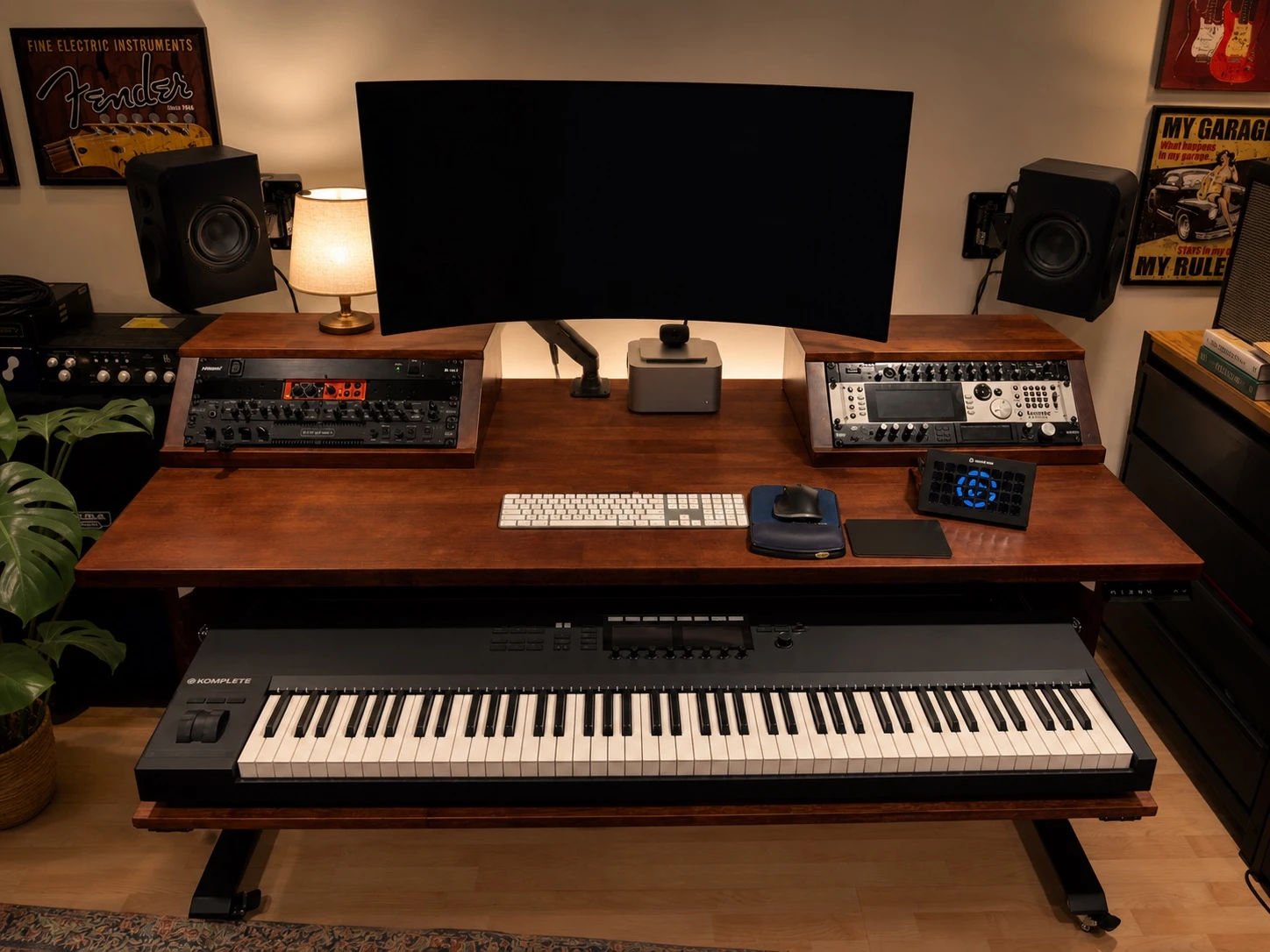
A slim controller can fit on a pull-out tray beneath the desktop. A taller or heavier piano may need a deeper boxed structure. A separate rolling side desk can keep the main workspace flexible, while rack-ready designs organise more complex systems.
Check vertical legroom before anything else
The desktop, tray structure, keyboard and a safe clearance all stack below the working surface. Measure your seated knee and mid-thigh height so the final arrangement remains comfortable.
Plan what you need to reach and see
Place the equipment you touch most within a relaxed reach. Set screens and speakers around your actual seated position, then decide whether a matching riser or shelf is needed. See how other studio setups were arranged.
Plan cables as part of the desk
List audio, power, USB and data connections. We can then plan grommets, trays, openings and access points without placing them where a clamp, rack or instrument needs to go.