
List the equipment
Include screens, speakers, audio interfaces, keyboards, controllers, rack gear, instruments and anything heavy or oversized.
Studio & equipment
Plan the desk around your screens, speakers, instruments and cables, so everything you use sits within comfortable reach.
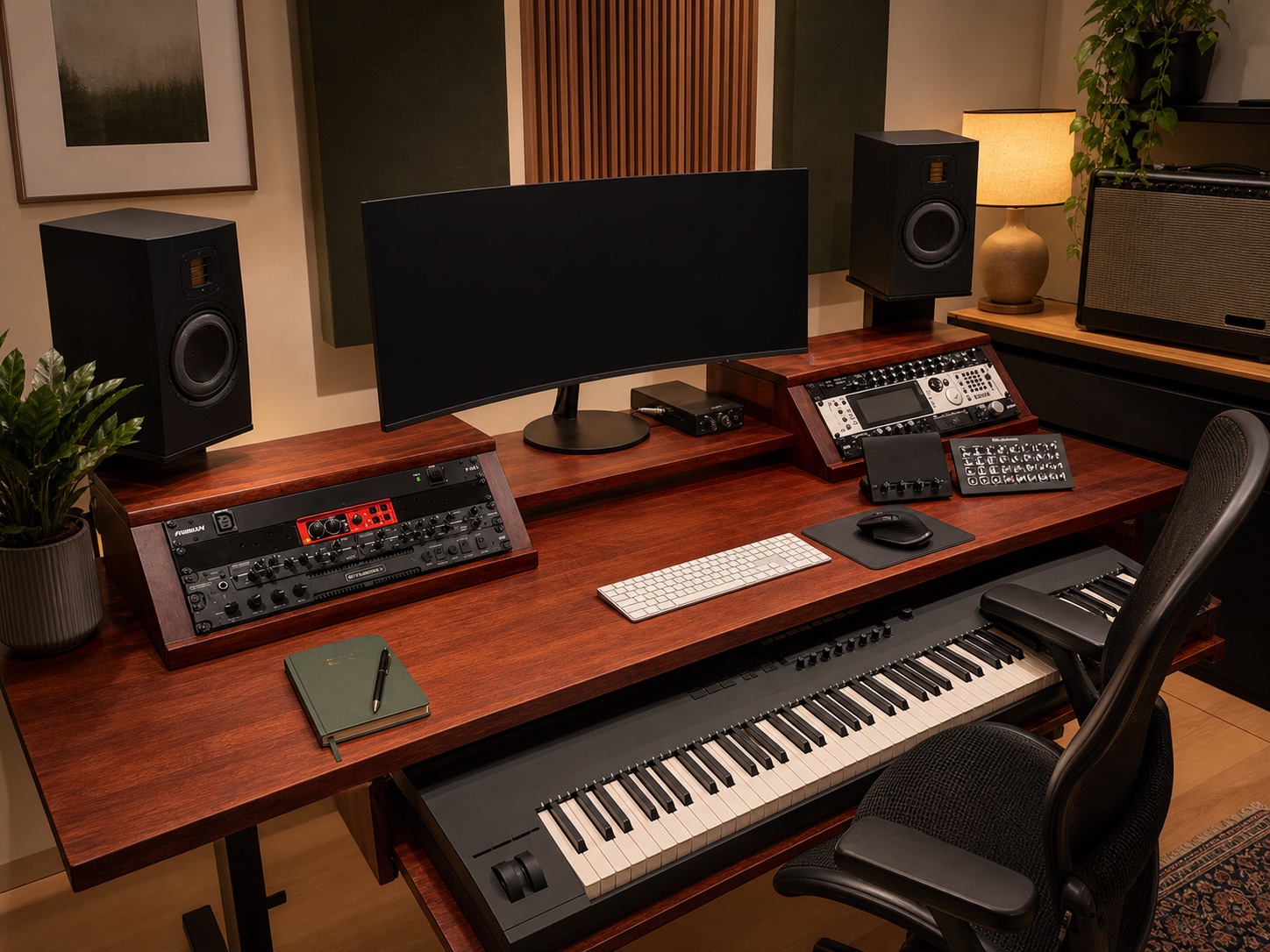
Built around the way you work
An honest note
If you only need a simple work surface, a standard desk may be the better-value choice.
Plan the workflow first
We’ll map your screens, speakers, keyboard tray, controllers, racks, cables and power before recommending the desk size and structure.
Studio desk planning
You do not need a technical drawing. Tell us what equipment must stay on the desk, what slides away and what you need to reach quickly.
Include screens, speakers, audio interfaces, keyboards, controllers, rack gear, instruments and anything heavy or oversized.
Tell us what you use constantly, occasionally and rarely. We’ll keep daily controls closer and avoid crowding your chair space.
Share the room width, desired tabletop depth and approximate gear weight so the desk can be supported properly.
Show where power points are and which equipment needs to move, slide out or stay ventilated.
Common studio desk formats
Best when the equipment layout is stable and you want a simple, strong desk.
Useful if you sit and stand, but cables, trays and speaker positions need extra planning.
For keyboards, controllers or instruments that need to slide out without stealing tabletop space.
For audio gear, consoles or gaming and streaming equipment that needs a reachable, ventilated place.
We will take you through the available wood and finish choices for your desk.
We match the tabletop depth, tray support, racks and cable openings to the weight, reach and future changes in your setup.