
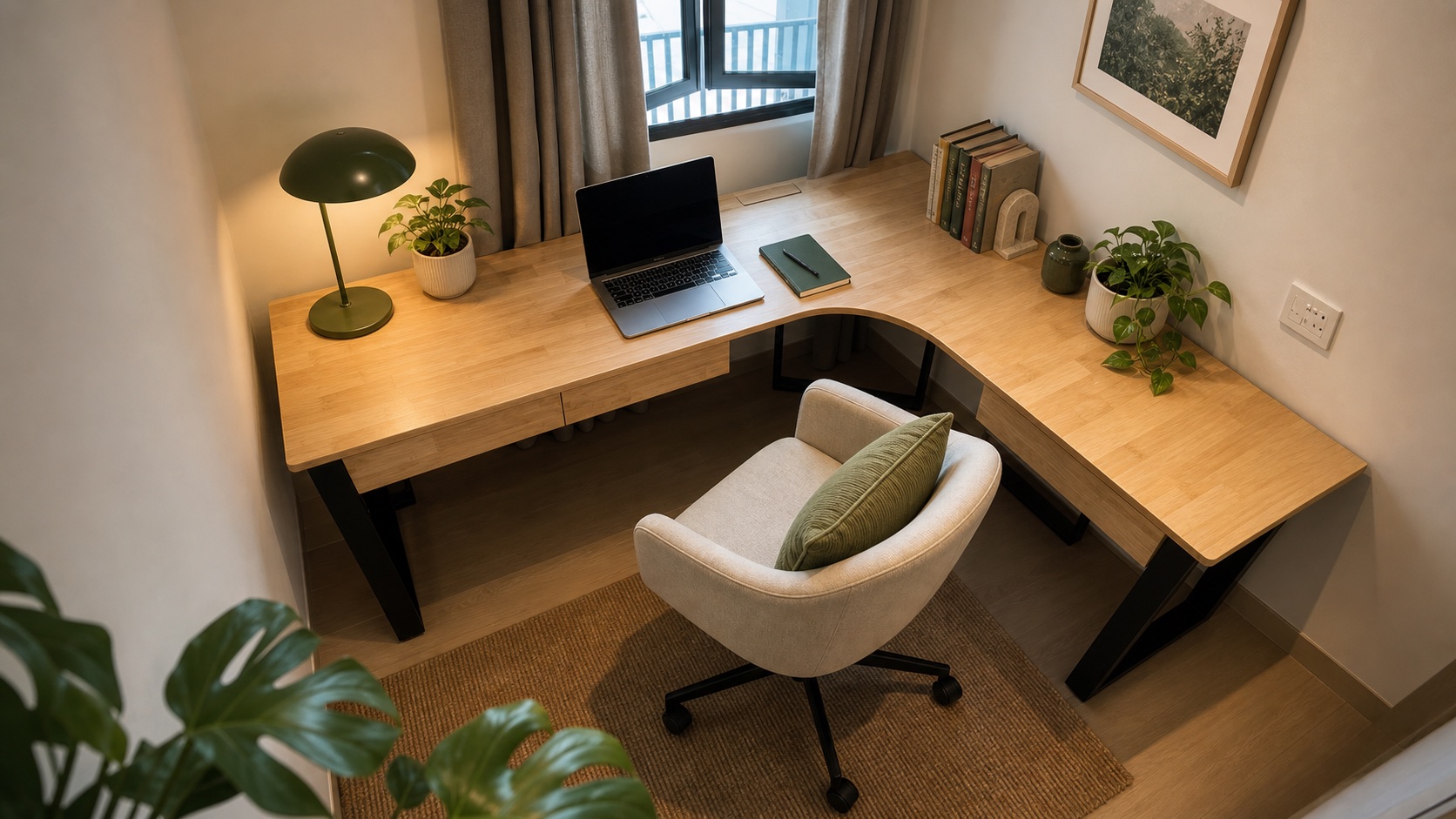
Choose which side the shorter section goes on
Sit where you expect to work. If the shorter section is on your left, it is a left-hand return; if it is on your right, it is a right-hand return. A room photo with the preferred position marked is even clearer.
Measure both parts separately
Record the main length and depth, then the return length and depth. Include the corner footprint, skirting, power points, nearby doors and the space needed to pull the chair back.
Choose how you want to use the corner
A square inner corner works when you mainly face one side. A curved inner corner supports a more central sitting position and easier reach across both sides. See how other corners were shaped.
Decide how the surfaces meet
Large L-shaped desks are commonly made from joined sections. A continuous one-piece form depends on the final footprint, available material and safe access into the room. We will explain the practical options before quoting.
Choose fixed or adjustable support
Fixed supports offer broad flexibility in size and storage. Adjustable corner desks need a compatible frame and a cable plan that can move safely through the full height range.